
Last update:
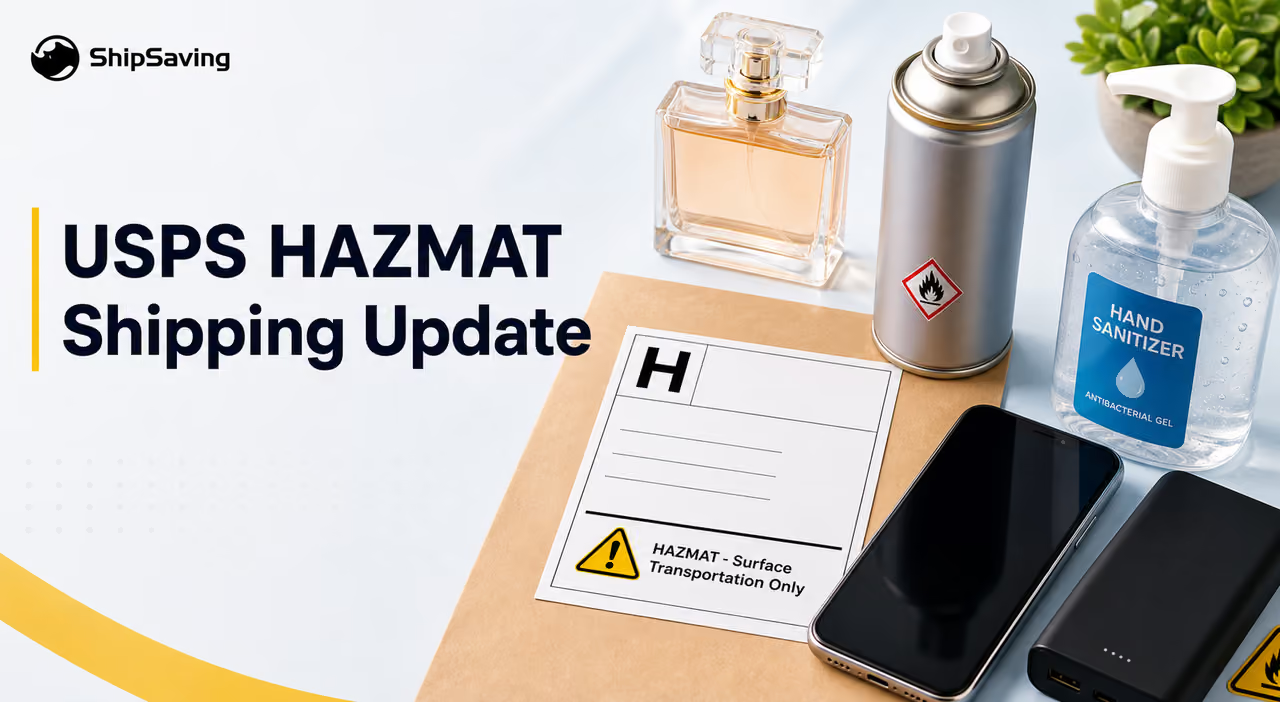
For many people, hazardous materials still sound like something far removed from everyday shipping. The phrase often brings to mind industrial chemicals, warehouse handling, and products most ordinary shippers would never deal with. However, USPS hazardous materials (HAZMAT) rules can apply to very normal shipping scenarios, including perfume, aerosol products, hand sanitizer, power banks, and electronics with lithium batteries.
That is part of what makes the latest USPS update worth paying attention to. USPS has announced plans to introduce a HAZMAT handling fee and a $50 HAZMAT noncompliance fee. The bigger point is not just that shipping some items may become more expensive. It is that hazardous materials compliance is becoming harder to ignore, not only for ecommerce sellers, but also for people mailing gifts, personal electronics, household items, or moving essentials.
Under U.S. hazardous materials transportation regulations, hazardous materials are grouped into nine hazard classes. USPS uses this framework in its hazardous materials mailing guidance, including Publication 52. The nine classes include:
For most sellers and individual shippers, the more practical takeaway is not memorizing every hazard class. It is important to recognize that everyday products can still trigger mailing restrictions, transportation limits, or special handling requirements once they enter the mailstream.
Items that seem ordinary at home or on a store shelf may still be treated differently in transit. Depending on what they contain, they may involve flammability, pressure, alcohol, or battery-related risks, all of which can affect how they must be mailed.
Most HAZMAT shipping mistakes do not start with deliberate noncompliance. More often, they begin with assumptions that seem harmless at first.
Some products may look routine, but they may still fall under hazardous or restricted mailing rules and should not be treated like standard packages. A bottle of perfume, for example, may require special handling, while something like fireworks may not be mailable at all.
Even when a shipment seems straightforward, USPS rules may still limit how it can be mailed. Some items are prohibited, some are restricted, and some can only travel under specific packaging, service, or transportation conditions. Assuming USPS will accept an item without checking is one of the easiest ways to create a problem.
Certain products, including some lithium battery-related items, may be limited to surface transportation rather than air.
Hazardous materials may require more than a standard box-and-label approach. Packaging, cushioning, sealing, and outer markings can all matter, and for sellers, those details should accurately reflect what is actually being sent.
For individual shippers, the first result may be simple but frustrating: a package that is refused, delayed, or returned. For sellers, the impact can spread further, adding costs, creating customer complaints, and disrupting fulfillment. As USPS introduces more explicit HAZMAT-related charges, those mistakes can become harder to overlook.
A simple review process can help you avoid some of the most common HAZMAT shipping mistakes.
If available, review the item’s Safety Data Sheet first to help determine whether it may fall under hazardous materials rules. If a product is flammable, pressurized, alcohol-based, or battery-powered, do not assume it can be mailed like ordinary merchandise. Some items are mailable, some are restricted, and some are prohibited, so that determination should be made before the package is prepared.
Some hazardous items cannot travel by air and may be limited to surface transportation because of the safety risks they can pose during air transit. For example, if you are mailing a used cellphone containing a lithium battery, USPS accepts it only by ground transportation. When creating the shipment in ShipSaving, be sure to review the available service and confirm that the package is being sent with an eligible ground option.
HAZMAT shipments often require more than standard packaging. Depending on what you're shipping, you may need sealed inner packaging, cushioning, absorbent materials, or a secondary container to help prevent leaks, damage, and movement during transit.
Some shipments may also require additional labels and markings. USPS says these should be placed on the same side as the shipping label, and outdated labels on reused boxes should be removed to avoid misclassification or compliance issues. For example, a used cellphone containing a lithium battery should be packed in a rigid outer box with enough cushioning to prevent damage during transit, marked with 'Restricted Electronic Device' and 'Surface Transportation Only', and labeled with UN3481.
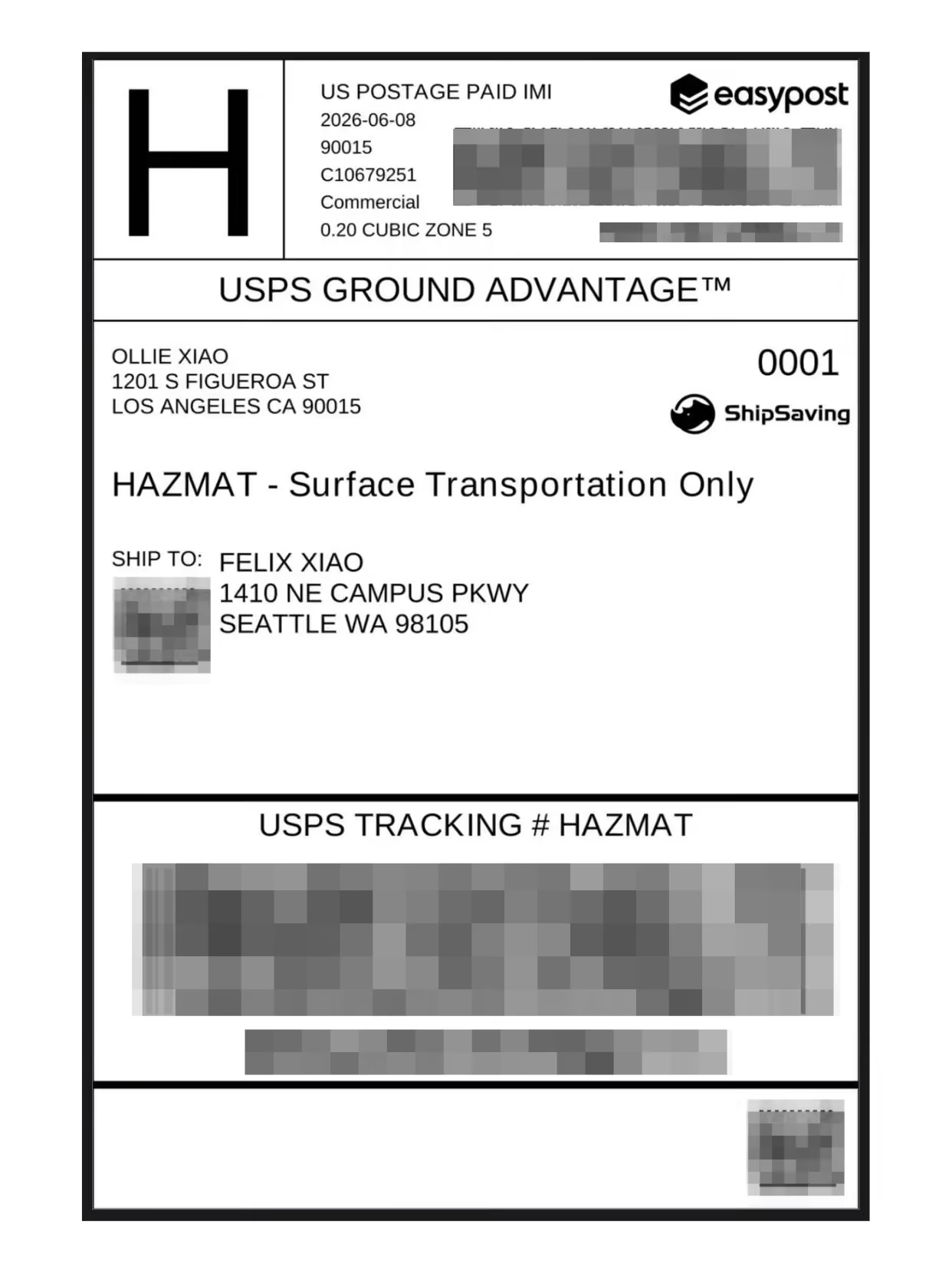
For sellers, compliance is not just about what is inside the box. When HAZMAT is properly declared, the shipping label may display an 'H' icon in the upper-left corner, and the applicable Service Type Code (STC) is embedded in the barcode to identify the shipment as HAZMAT. It is also important to label your package correctly and place any required markings on the same side as the shipping label.
If you are shipping a hazardous item but do not see those indicators on the label, that may be a sign the package was not prepared correctly or that the proper HAZMAT label was not generated.
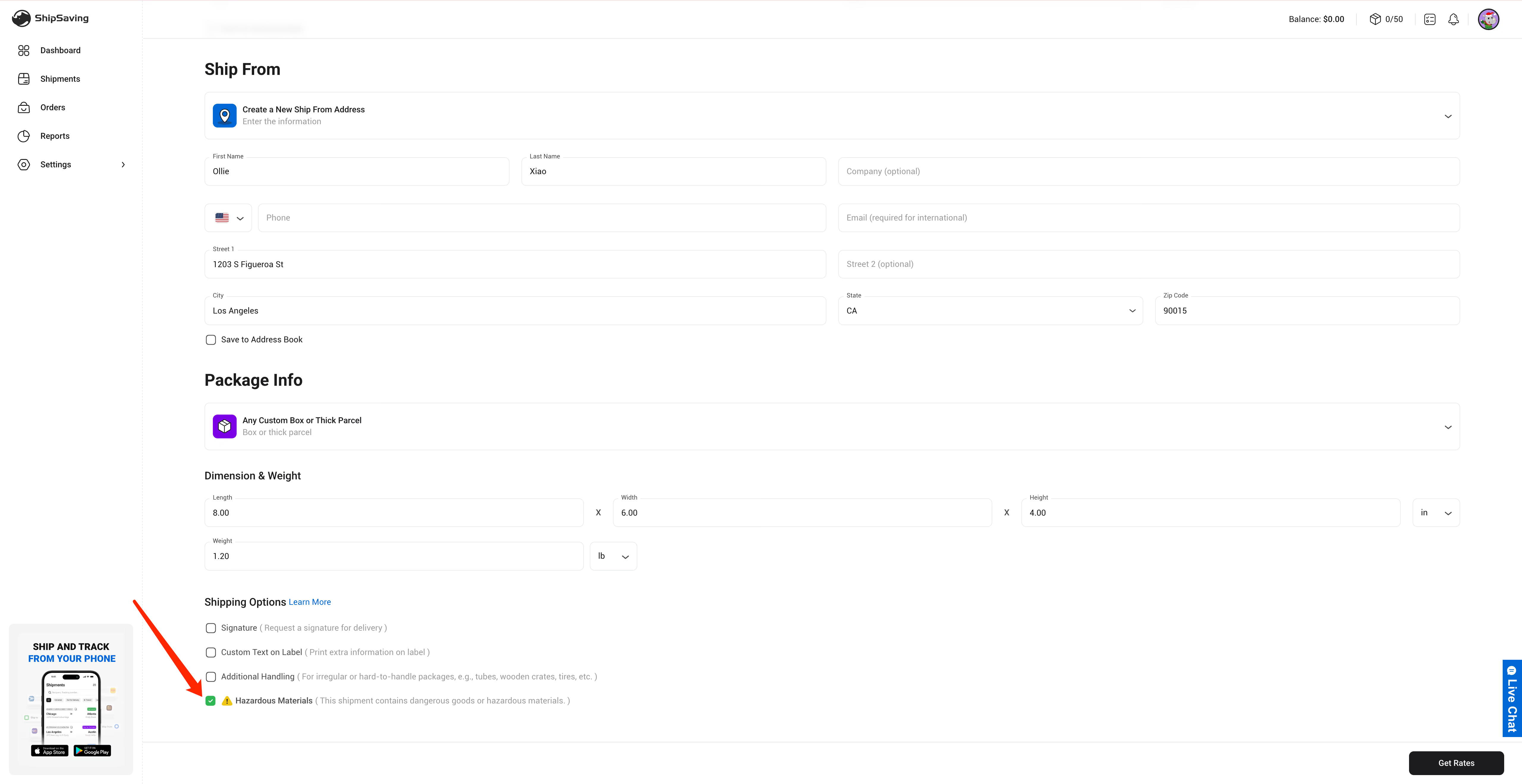
Once you've confirmed that your item is mailable and eligible for the appropriate transportation method, ShipSaving makes it easy to generate USPS HAZMAT labels. Simply enter the package dimensions and weight, select the Hazardous Materials option, review the available services, and create the label.
Keep in mind that generating a HAZMAT label does not replace USPS requirements. The package must still meet all applicable packaging, marking, and documentation standards.
The most important takeaway from the USPS update is not simply that hazardous materials shipping may cost more. It is that many common mailing scenarios already involve products that require more attention than standard packages.
For both sellers and individual shippers, the better habit is to check first and mail second. Getting clear on the rules before the July changes take effect is much easier than dealing with delays, returns, or added fees afterward.
Ready to simplify USPS HAZMAT shipping? Create a free ShipSaving account to generate compliant shipping labels, compare carrier rates, and save up to 90% on shipping costs.
Written on: