
Last update:
For ecommerce sellers, shipping is about more than simply finding the lowest rate. It is also about choosing the right service for the package, the destination, and the delivery timeline.
Some orders do not just need to arrive “soon.” They may need to arrive before a deadline, an event, or a customer’s expected delivery date. That is why shipping decisions are often about more than cost alone. They are about matching each order to the right combination of package profile, destination, and service level.
Instead of asking only which carrier is cheapest, sellers often need to ask a more practical question: which carrier and service make the most sense for this specific order?
Before comparing specific services, it helps to start with a few basic factors:
Package size and weight are closely tied to shipping rates, since larger or heavier packages take up more space and capacity in transit.
Orders that need to arrive by a certain date may justify faster services, even if they cost more.
Carriers use shipping zones to reflect how far a package needs to travel, and those zones can affect shipping rates.
This can immediately narrow down the available service options, as not every service supports PO Box delivery.
Address type can also affect which services are relevant to compare, since some services are available for residential deliveries while others are available for business addresses.
These factors help sellers decide which services are worth comparing first. A small, local, non-urgent order may point to very different options than a larger, time-sensitive shipment going a longer distance.
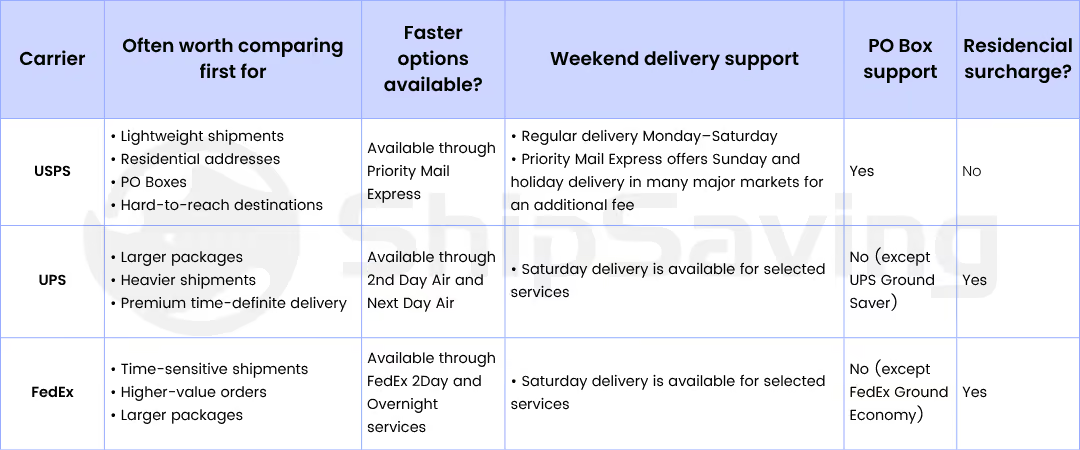
At a high level, each carrier tends to be stronger in different situations, as shown in the quick comparison below.
Each comparison example below is based on service options shown in ShipSaving under the same package dimensions, weight, and shipping distance for that specific scenario.
If the order is not especially urgent and cost control matters most, economy services are usually the most practical options to compare first.
A useful shortlist includes:
These services are especially relevant for non-urgent orders where cost control matters more than the fastest possible delivery. The goal here is to balance costs with a normal, workable delivery timeline.
6 x 6 x 6 in. package weighing 2 lb — Los Angeles, CA to Boston, MA (Zone 8):
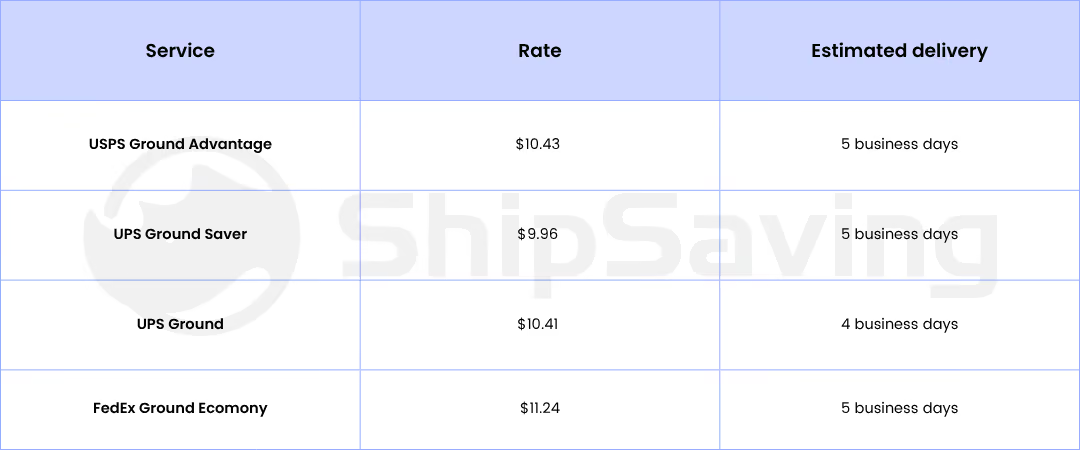
In this scenario, economy services from USPS and UPS are more competitive than the FedEx ground options for a lightweight, non-urgent package. That makes USPS Ground Advantage, UPS Ground Saver, and UPS Ground the more practical starting points for this type of order.
For qualifying domestic shipments, flat-rate options are especially worth comparing when sellers want pricing that is easier to understand, particularly for packages traveling longer distances.
A useful shortlist includes:
For longer-distance shipments, flat-rate options can make it easier to compare costs without relying as heavily on standard zone-based pricing.
It is also important to note that carriers present flat-rate shipping differently. For example, FedEx One Rate is not a standalone delivery-speed service name. It is a flat-rate option available within certain FedEx services.
USPS Priority Mail Flat Rate Medium Box and FedEx Medium Box — Chicago, IL to New York, NY (Zone 5):
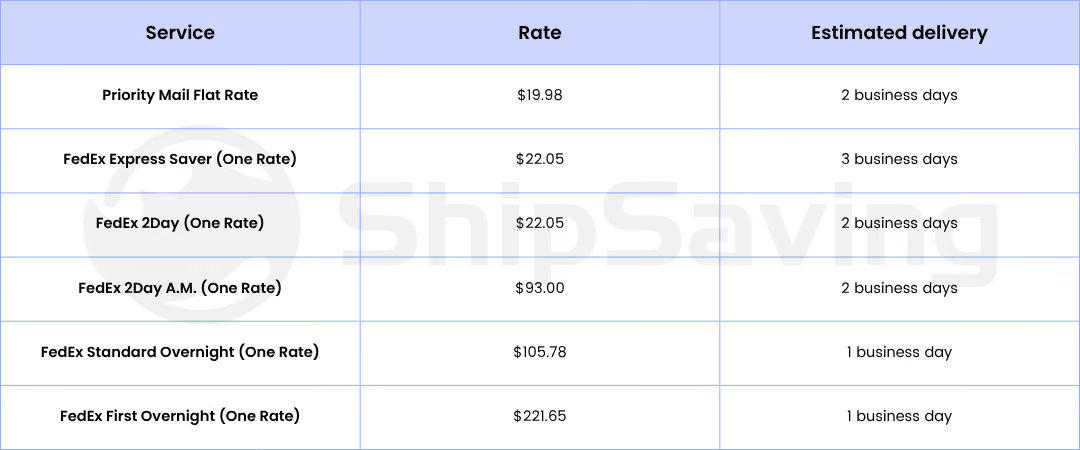
In this comparison, USPS Priority Mail Flat Rate is the more cost-effective option, while FedEx One Rate offers a broader selection of expedited service levels at higher price points. For long-distance shipments, flat rates can help provide more predictable shipping costs regardless of destination zone. However, it's important to note that flat-rate pricing does not always result in the lowest available shipping cost.
For larger or heavier shipments, UPS Ground is often the most competitive service to compare first, while FedEx Ground can still be worth reviewing as another standard ground option.
A useful shortlist includes:
USPS Priority Mail is usually less competitive for heavier shipments and has a 70 lb maximum weight.
20 x 16 x 15 in. package weighing 60 lb — Seattle, WA to Omaha, NE (Zone 6):
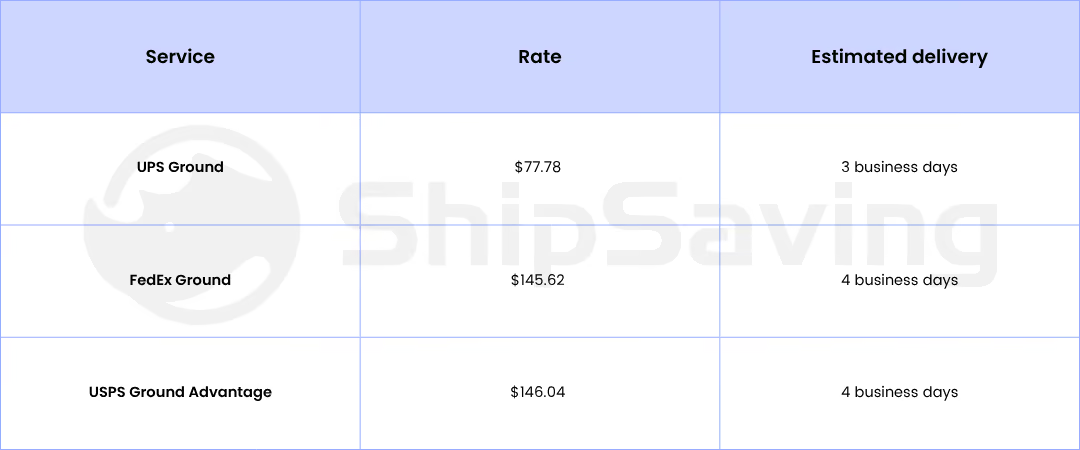
In this scenario, UPS Ground comes in significantly lower than both FedEx Ground and USPS Ground Advantage while also offering a faster estimated delivery window. For this package profile, that makes UPS Ground the strongest option to compare first.
Some orders need to move faster than standard ground shipping, but do not yet require the most urgent 2-day or next-day options.
In these cases, sellers may want to compare:
These services can work well as a middle ground between cost and speed, especially when the seller wants something faster than economy ground shipping without moving straight to premium expedited options.
12 x 10 x 4 in. package weighing 3 lb — Los Angeles, CA to New York, NY (Zone 8):
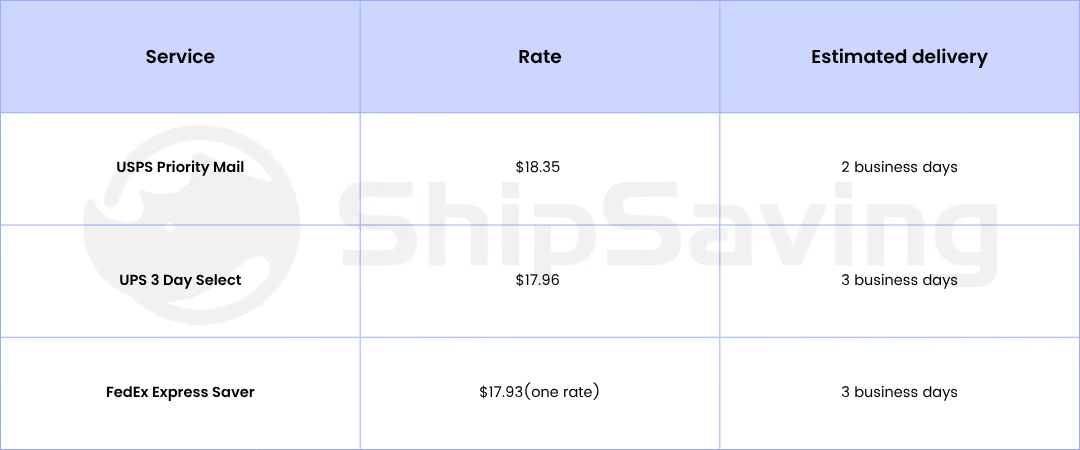
In this scenario, USPS Priority Mail is the fastest option with a 2-business-day estimated delivery window, while FedEx Express Saver offers the lowest rate. UPS 3 Day Select is priced similarly to FedEx but has the same 3-business-day delivery estimate, making USPS the speed option and FedEx the value option.
For the most time-sensitive orders, sellers should compare faster services such as the ones below. In these cases, delivery certainty matters more than simply finding the lowest rate.
A useful shortlist includes:
For qualifying packages, FedEx One Rate may also be worth checking—especially when the shipment is going a longer distance, needs to arrive quickly, and still falls within the service’s packaging and weight limits.
10 x 8 x 2 in. package weighing 2 lb — Chicago, IL to Boston, MA (Zone 5):
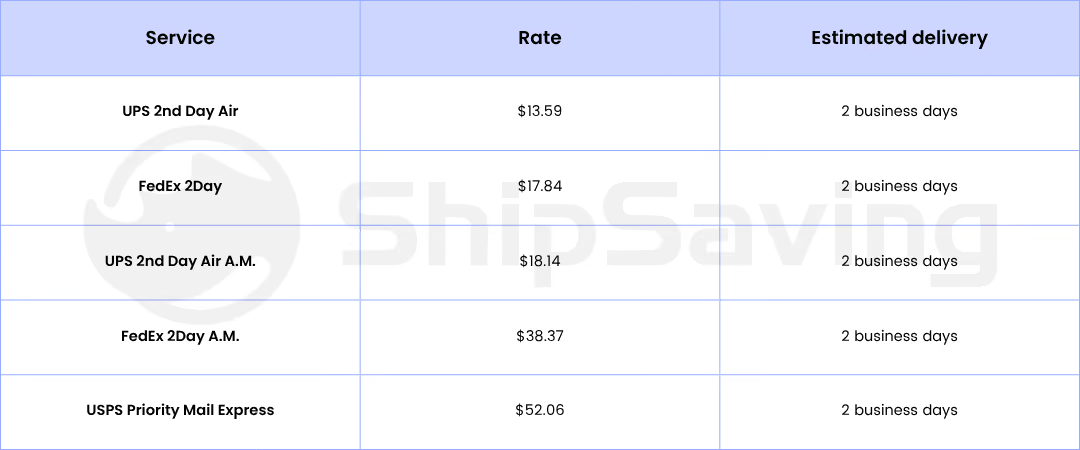
In this scenario, the more useful comparison is not just between carriers, but between service tiers. Lower-priced 2-day services may already be fast enough for some urgent orders, while overnight options become more relevant when delivery time needs to be shortened as much as possible. That makes it easier to judge when a lower-cost expedited option is enough and when a faster premium service is worth the added cost.
.avif)
For ecommerce sellers, the challenge is not just finding a shipping service. It is comparing the right options efficiently enough to make a confident decision without slowing down fulfillment.
That is where ShipSaving fits in. Instead of checking multiple carrier sites one by one, sellers can compare the most relevant shipping options for the order in front of them and move faster once they are ready to ship.
Sellers can use ShipSaving to:
For sellers who want to reduce repetitive decision-making, ShipSaving’s Shipping Rule feature can also help automate service selection based on predefined order conditions. That can be especially useful during periods of higher order volume, when speed and consistency both matter.
There is no single best shipping service for every order.
Some shipments are better matched with economy ground options. Others may benefit from a flat-rate option, a 3-day service, or a faster expedited service with stronger delivery certainty.
The best shipping decision is usually not just the cheapest one. It is the one that best fits the package, the destination, the timeline, and the customer expectation behind the order.
If you want to compare USPS, UPS, and FedEx services more efficiently, create labels in one place, and save up to 90% on shipping costs, create a free ShipSaving account and start shipping smarter.
Written on: