
.avif)
Last update:
Shipping costs for Shopify orders can vary from one shipment to another. Package size, weight, destination, and shipping service all play a role in determining the final rate, which means there isn't one carrier or service that's always the cheapest. The best way to save is to compare available shipping rates for each order.
In this guide, we'll use common Shopify package types to compare shipping costs and identify the cheapest shipping options for different types of shipments. We'll also show you how to access discounted shipping rates with ShipSaving and save more on every Shopify order.
The cheapest way to ship Shopify orders is to compare rates for each shipment rather than relying on a single carrier. USPS, UPS, and FedEx may offer different advantages depending on your package's size, weight, destination, and delivery needs, so the lowest-cost option can vary from order to order.
Instead of checking multiple carrier websites individually, ShipSaving Quick Rate lets you compare available shipping services and rates in one place. You can quickly see your options side by side and choose the most cost-effective service for each Shopify order.
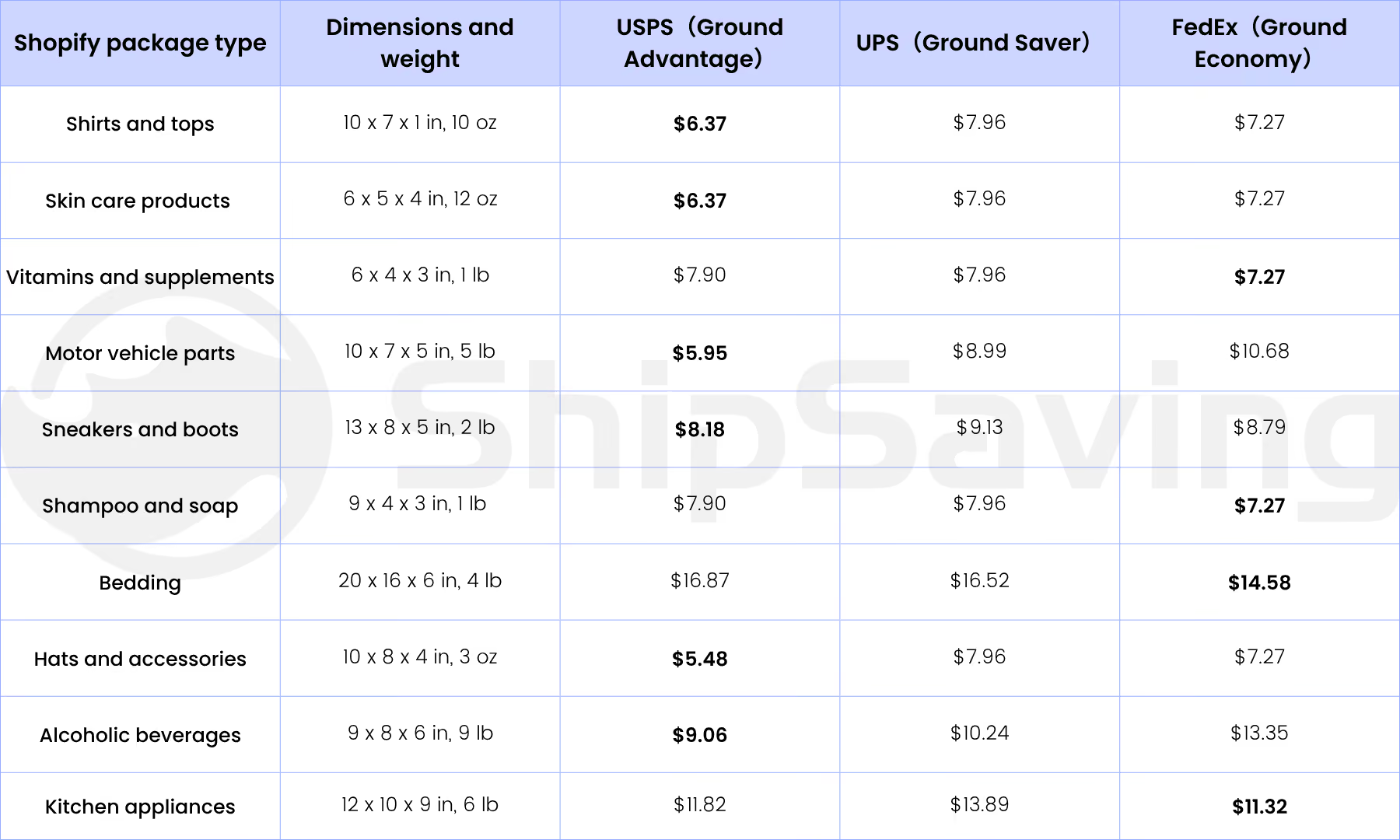
Below are discounted rates available through ShipSaving for selected Shopify product categories based on Shopify's 2026 online product trends. The comparison focuses on three lower-cost ground options: USPS Ground Advantage, UPS Ground Saver, and FedEx Ground Economy. Each package example uses the same shipment conditions to keep the carrier comparison consistent, and the cheapest option in each row is highlighted.
The rates below were available through ShipSaving on July 21, 2026, for shipments from Seattle, WA (98033) to Los Angeles, CA (90029).
Actual rates vary by origin, destination, package size, weight, service, and ship date.
The cheapest option changed by package type. On this route, USPS Ground Advantage was the cheapest on 6 of the 10 package types, while FedEx Ground Economy was the cheapest on vitamins and supplements, shampoo and soap, bedding, and kitchen appliances. UPS Ground Saver was not the cheapest in this test, but it stayed close on several rows. The gap between the cheapest and highest rates ranged from $0.69 to $4.73. That is why Shopify sellers should compare rates on every order. ShipSaving makes that easier by letting you check discounted USPS, UPS, and FedEx rates before you buy the label.
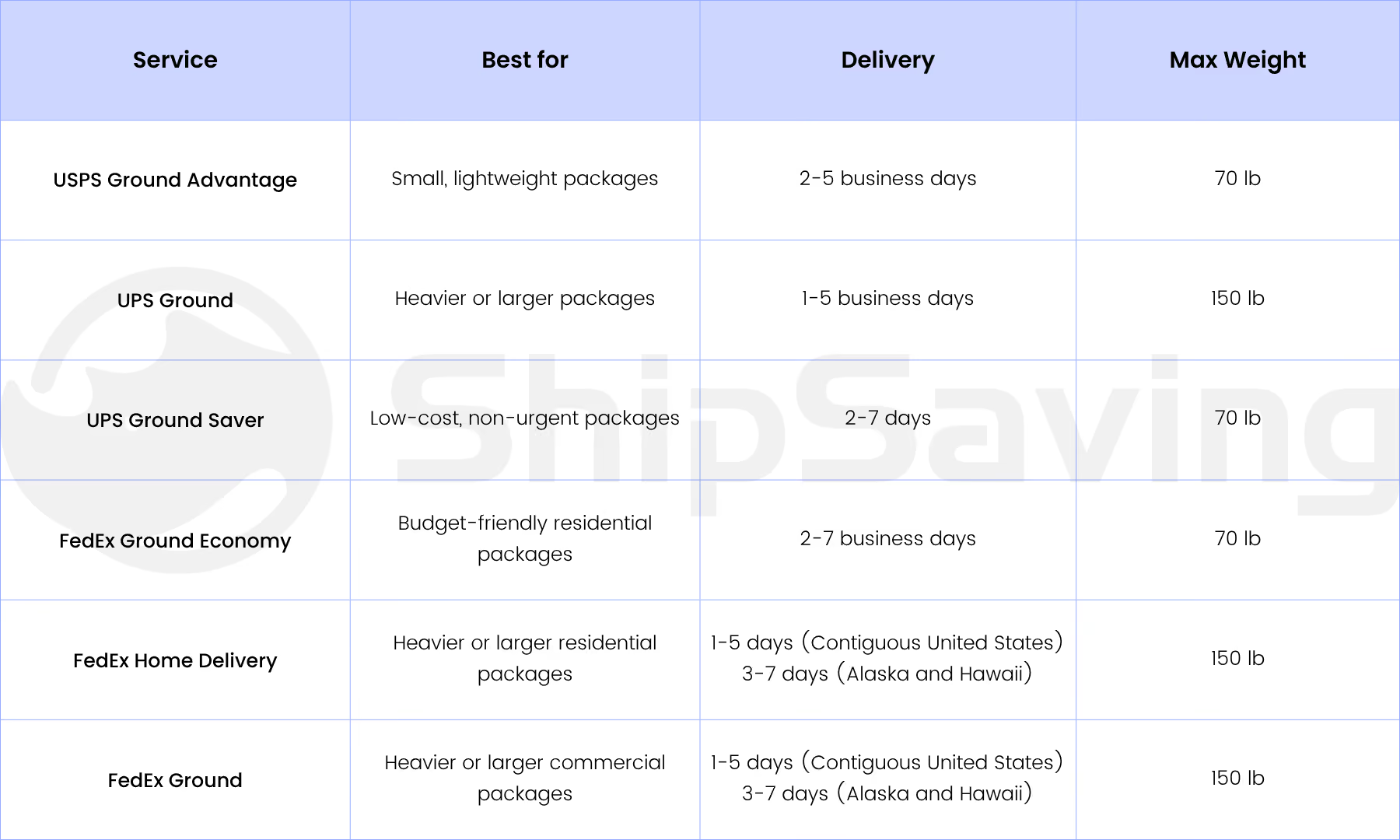
Price is only part of the decision. Delivery time, package limits, and service type can all affect which option makes the most sense for a shipment.
The cheapest carrier is not the same for every Shopify order. The lowest rate can change as package weight, dimensions, and shipping zone change.
Small and light - For small, light packages, USPS is usually worth checking first, especially Ground Advantage as a lower-cost domestic option.
Small but heavy - A small box does not always mean a low rate. When a package is heavy for its size, actual weight matters more, and USPS Cubic is worth testing. Cubic Pricing can be a good fit for small, heavy products such as books or hardware.
Large but light - Large lightweight packages can get expensive quickly. Some services apply dimensional weight when package volume exceeds 1 cubic foot (1,728 cubic inches), so a package that is light for its size can still cost more to ship.
Heavy packages - At heavier weights, service limits start to narrow the options. USPS Ground Advantage, UPS Ground Saver, and FedEx Economy both cap at 70 lb. UPS Ground, FedEx Ground, and FedEx Home Delivery go up to 150 lb, so they become the main services to compare on heavier shipments.
Lowering Shopify shipping costs comes down to three key strategies: using the right packaging, comparing live discounted shipping rates across carriers, and using a shipping platform that provides discounted rates.
Shipping costs depend on the package you actually ship, not just the product itself. If the box is larger or heavier than necessary, you'll pay more before you even compare shipping options. Using the right packaging for each order helps keep weight, dimensions, and dimensional-weight charges under control.
A custom package gives you more flexibility when comparing shipping rates. For example, if you use a USPS Priority Mail Flat Rate box, your shipping options are limited to eligible USPS Priority Mail services. By using your own packaging instead, you can compare rates across USPS, UPS, FedEx, and DHL on ShipSaving for the same shipment and choose the option that works best for each order.
The carrier isn't the only factor that affects your shipping cost—where you buy your label matters too. ShipSaving connects with Shopify, automatically imports your orders, and lets you compare discounted USPS, UPS, FedEx, and DHL rates in one place. Once you've found the best option, you can purchase your label without leaving the platform.
ShipSaving's Shopify integration automatically syncs your orders, allowing you to compare live discounted shipping rates, purchase labels, and manage tracking—all from a single shipping platform.
With ShipSaving, you can access discounted carrier rates with no volume requirements, including up to 89% off USPS, 85% off UPS, and 90% off FedEx shipping services.
Lowering your Shopify shipping costs isn't just about finding the lowest label price. An efficient shipping workflow also helps you save time, reduce manual work, and minimize costly shipping errors. ShipSaving provides built-in automation tools to streamline every step of the fulfillment process:
For lightweight clothing packed in a mailer, USPS Ground Advantage is a good place to start. In the example table above, shirts and tops were cheapest on USPS Ground Advantage at $6.37. If the shipment includes multiple items, heavier pieces like hoodies or denim, or needs a box instead of a mailer, compare rates again before you buy the label.
Bedding is usually a size problem more than a weight problem. In the example above, bedding was cheapest on FedEx Ground Economy at $14.58, compared with $16.52 on UPS Ground Saver and $16.87 on USPS Ground Advantage. Because large boxes can trigger dimensional-weight pricing, even a small reduction in package size can change which carrier is cheapest.
Free shipping can work if your margins, average order value, and product mix support it. Many sellers make it sustainable by setting a free-shipping threshold, limiting it to lighter or higher-margin items, and lowering their actual label cost with discounted rates.
The cheapest way to ship Shopify orders is to compare USPS, UPS, and FedEx services on the exact parcel before you buy the label. Use the same final packed weight, outside dimensions, origin, destination, and ship date for every quote.
ShipSaving makes that easier by letting you compare rates quickly, buy the label in the same workflow, and access discounted shipping rates. Sign up for a free ShipSaving account and try it on your next order.
Written on: